
By Ariana Ramos | SVP Business Development

The pet services industry continues to expand as owners increasingly view animals as members of the family. Pet day care centers, boarding facilities, grooming operations, and training businesses have evolved from simple kennels into structured care environments offering enrichment programs, social play, and specialized services.
As the industry grows, so does its exposure profile.
For independent insurance agents, placing coverage for pet care facilities can present challenges. Animal-related businesses carry inherent unpredictability. Even well-managed facilities with strict procedures cannot fully eliminate behavioral variables or operational risk. Carrier appetite varies widely, and standard business owner policies often fall short when it comes to the nuances of animal exposure.
That is where Telamon Insurance supports agents by providing access to specialty markets familiar with pet-related risks. To fully understand how coverage should be structured, it helps to look at these operations from the inside out.
The Front Desk: Where Exposure Begins
Risk begins before a single kennel door closes.
At check-in, staff collect vaccination records, review feeding instructions, and confirm waivers. A clerical oversight—such as misrecording medication instructions or failing to confirm temperament history—can create complications later. Meanwhile, customers move in and out with leashes, carriers, and often multiple animals in a shared space.
Slip-and-fall incidents are not uncommon, especially in wet weather. A dog reacting unexpectedly in a waiting area can cause injury to another animal or a customer. Even minor incidents can escalate quickly when emotions are involved.
General liability coverage must account for these daily interactions. Premises liability, customer injury exposure, and appropriate abuse and molestation considerations may all warrant review. Many standard carriers approach animal operations cautiously, making wholesale access important when underwriting becomes restrictive.
The Kennel Floor: Care, Custody & Control
The most critical exposure lies where the animals stay.
Once a pet is boarded, the facility assumes responsibility. Dogs socialize in playgroups. Staff supervise feeding and rest periods. Even with careful protocols, incidents can occur—animals may fight, ingest foreign objects, become ill, or attempt escape.
Standard general liability policies typically exclude property in the insured’s care, custody, or control. Without a specific Care, Custody & Control endorsement, coverage may not respond to injury or loss involving boarded animals.
CCC coverage must be evaluated in light of the facility’s size and capacity. Sublimits per animal and aggregate limits should reflect the maximum number of animals on-site at peak periods. Veterinary expense endorsements can also play an important role in managing smaller claims before they escalate into litigation.
Wholesale markets experienced in animal-related classes understand these exposures and can help agents structure limits aligned with operational realities.
Grooming and Training Areas: Service-Based Liability
Many facilities expand beyond boarding to include grooming and training services. These activities introduce a professional services dimension to the exposure.
Grooming involves specialized tools, restraint equipment, and direct physical handling. Even routine procedures can result in allegations of injury if an animal reacts unpredictably. Training services carry their own risks, particularly if a dog later causes injury and the training methods are scrutinized.
Professional liability enhancements or endorsements may be necessary depending on the scope of services offered. Not all carriers automatically include grooming or behavioral training within their appetite.
Wholesale brokers assist agents by clarifying service breakdowns in underwriting submissions, ensuring carriers fully understand the nature of operations before terms are offered.
After Hours: Property and Business Interruption
When customers leave for the day, the exposure remains.
Overnight boarding requires climate control, secure enclosures, and functional fire suppression systems. An HVAC failure during extreme temperatures, a power outage, or a fire event can create significant property and liability exposure.
Property coverage must accurately reflect building improvements, kennel installations, fencing, and specialized equipment. Equipment breakdown coverage may be particularly important where temperature regulation is critical to animal safety.
Business income coverage also deserves careful attention. If a facility must temporarily close following a covered loss, revenue interruption can be financially damaging. Coordinating property, business interruption, and CCC coverage becomes especially important in catastrophic scenarios involving both structural damage and animal injury.
A Claim That Demonstrates the Exposure
Consider a boarding facility operating at full capacity during a holiday weekend. An electrical malfunction sparks a small fire overnight. The sprinkler system activates, limiting structural damage but causing water damage throughout the kennel area. Several animals suffer smoke-related illness.
The facility must close temporarily for repairs. Pet owners seek reimbursement for veterinary bills and additional care expenses. Public attention increases scrutiny of the business’s safety protocols.
In a properly structured insurance program, property coverage addresses building damage. Business income coverage replaces lost revenue during closure. Care, Custody & Control coverage responds to veterinary expenses for injured animals, subject to policy limits.
The outcome of the claim depends not simply on whether coverage exists, but on how thoughtfully the program was structured at placement.
Structuring Protection in a Selective Market
Animal-related businesses operate in a class where underwriting appetite fluctuates. Bite history, claims experience, supervision procedures, and facility design all influence carrier decisions.
Wholesale brokers bridge the gap between retail agents and specialty markets comfortable with these exposures. By assisting in the presentation of detailed operational information—such as staff training protocols, vaccination requirements, and incident management practices—wholesalers help position risks effectively.
They also assist in securing appropriate CCC limits and excess capacity when necessary, ensuring that the insurance program reflects the scale and complexity of the operation.
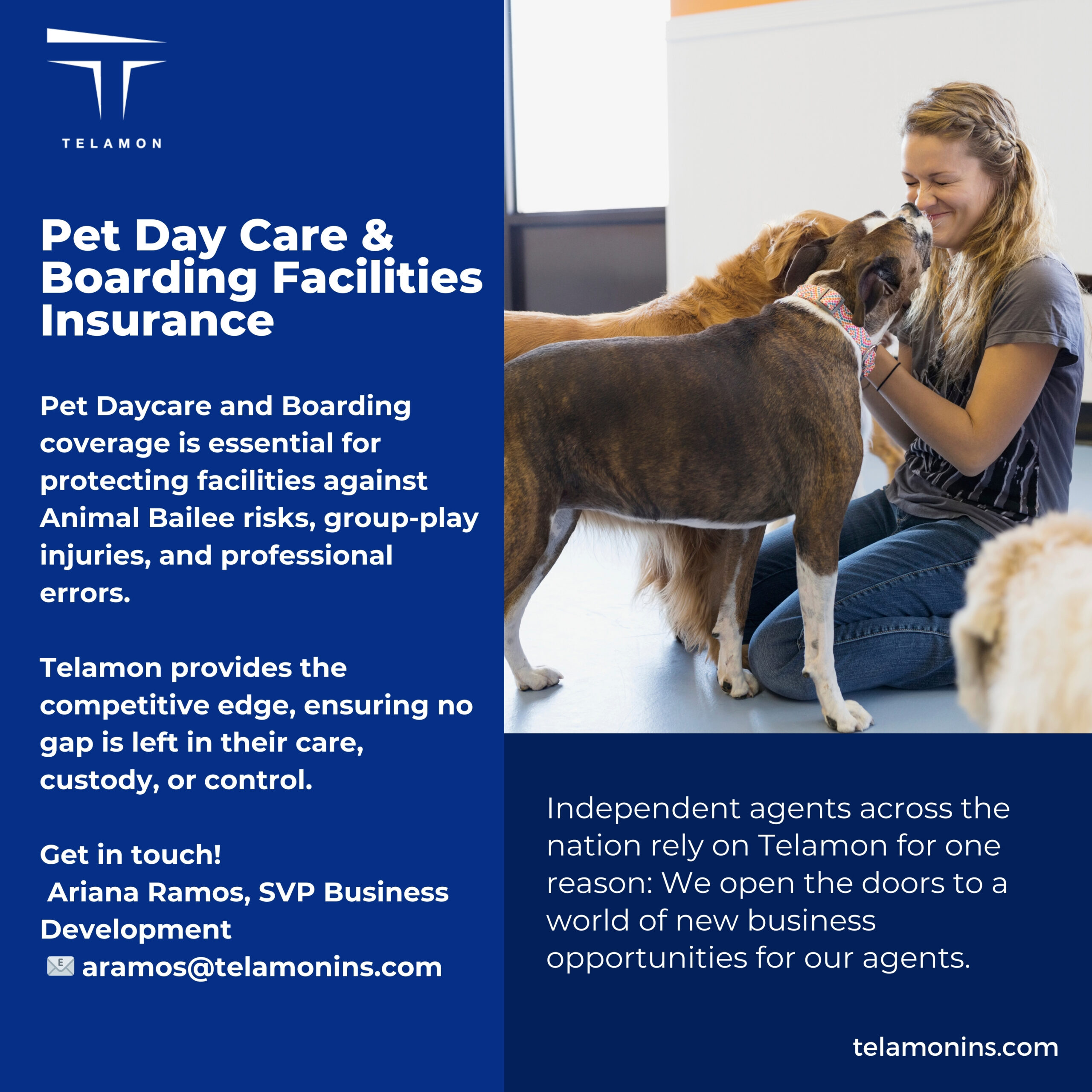
Building Confidence in Pet Care Placements
Pet care facilities operate on trust. Owners expect their animals to be safe and supervised in a controlled environment. Insurance programs must mirror that responsibility.
When admitted markets hesitate or coverage questions arise around Care, Custody & Control or professional services exposure, specialty access becomes essential.
If you are working with a pet day care, boarding facility, or grooming operation and encountering placement challenges, Telamon Insurance can help you explore specialty market solutions designed for animal-related risk. Connect with our wholesale team to structure coverage that reflects the true operational exposure of today’s pet care businesses.